

Sign in to Hivenet
Access your files and manage your storage account.
Store
Access your files and manage your storage account.
Compute
Launch instances and manage your compute resources.
Store and Compute still use separate accounts today. We’re working on a unified sign-in.
Just need to send a file?
Use Send directlyNew to Hivenet? Get Started
Get started with Hivenet
Choose what you want to use first.
Store
Back up photos and files across your devices.
Compute
Launch self-serve GPU compute for demanding work.
Store and Compute still use separate accounts today. We’re working on a unified account experience.
Need Hivenet for business?
Talk to salesNeed to send a file?
Open SendAlready have an account? Sign in
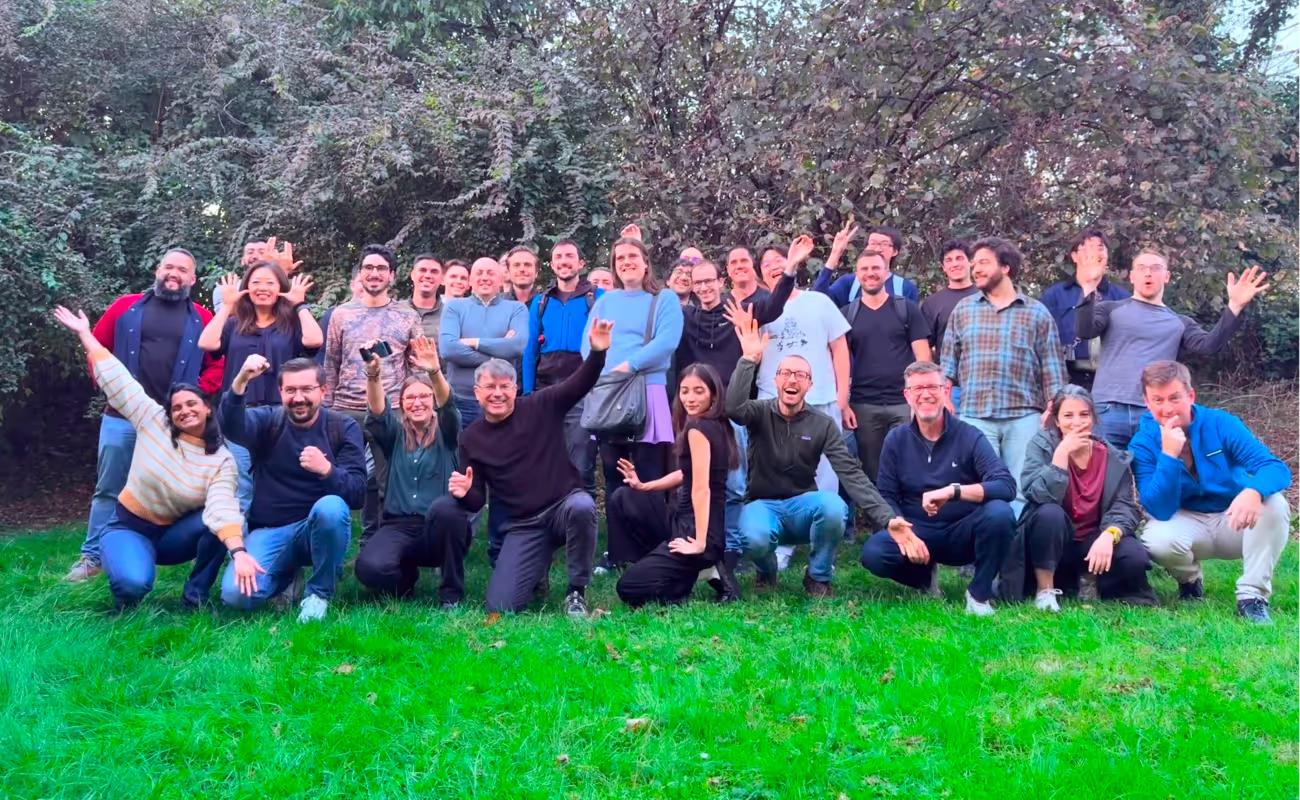
Work on the distributed cloud.
We build cloud products for people and teams who want more control over where their data lives, how it’s protected, and how much it costs to run.
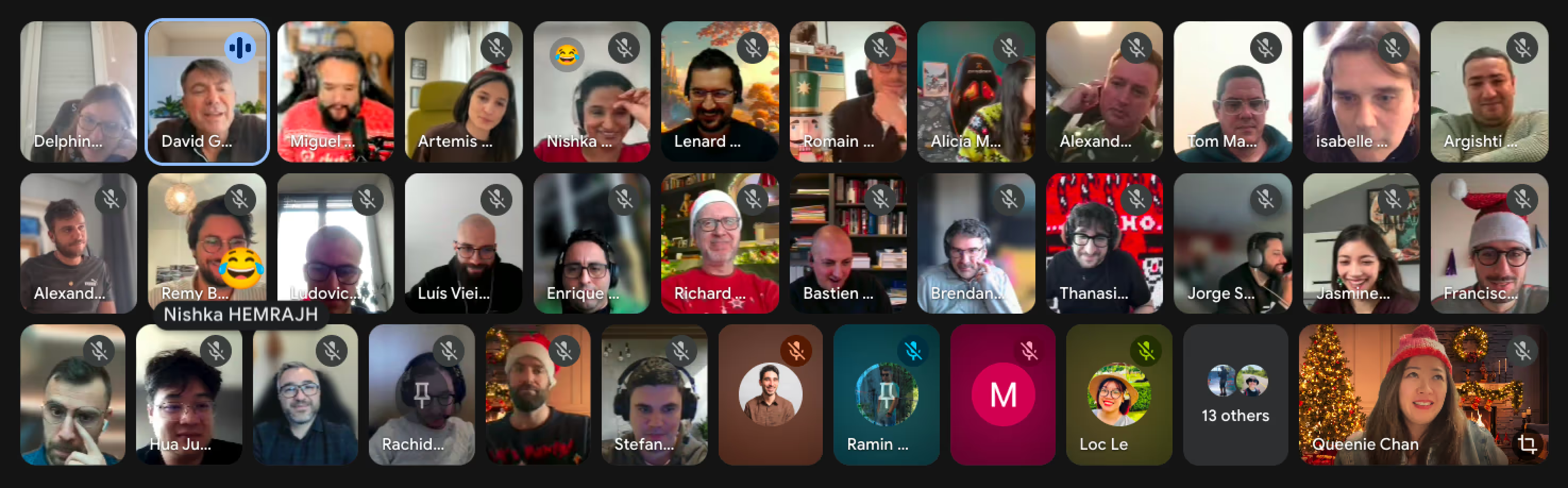
We’re fully remote and collaborate mainly across European time zones.
Quick facts
Remote work
Fully remote. We plan work so people can do deep work without living in meetings.
Time zones
Most collaboration happens in European time zones. Each role states the overlap hours we need.
Working language
English
Where we hire
We prefer candidates in or near European time zones, but we hire more broadly when the fit is right.
Contract types
Both employees and contractors.
Compensation
We share the compensation range after the first call. Where local law requires ranges in job ads, we include them.
Hiring timeline
A typical process takes about 2 weeks from intro call to decision, depending on scheduling.
What we do
Hivenet builds cloud products on distributed infrastructure. We try to make privacy and control practical without asking users to learn the system behind the scenes.

Store
with Hivenet
A cloud storage product built on client-side encryption and a distributed design. It feels familiar to use, even though the architecture works differently.

Compute
with Hivenet
A way to run GPU and CPU workloads with clear boundaries, predictable behavior, and a deployment path teams can understand without digging through layers of abstraction.

Send
with Hivenet
Send large files quickly, without unnecessary steps or accounts.
The work here often means turning hard constraints into simple, visible choices. You might shape product behavior, improve performance, write documentation, clarify edge cases, or help teams make better decisions with less confusion.
How we work
We design for calm, and we try to work the same way.
Most decisions start in writing.
Clear docs give everyone the same context, reduce repeated discussion, and make remote work fair. If something matters, it gets written down in a place people can find later.
We default to async because focus matters.
People work at different hours, and uninterrupted time is respected. We use live calls when a problem needs speed, nuance, or real disagreement.
Ownership is explicit.
Work usually has one clear owner from framing to delivery. To make that possible, we keep scope tight and expectations clear, and we prefer small, solid progress over plans that drift.
Quality is built in
Security, reliability, and clarity shape how features are designed and when they’re considered done.
Why we exist
Most cloud products are built on centralized systems that hide trade-offs and reduce choice over time. Control is traded for convenience, often without a clear choice.
We’re building cloud products where privacy and sustainability are built into how things work from the start. The aim is practical: give people and teams more control, without forcing them to become system experts to stay safe.
What tends to work well here
People who do well at Hivenet like turning constraints into usable decisions, and they don’t treat “complex” as an excuse to be unclear. They can explain their thinking in writing, and they’re comfortable disagreeing in a document when it matters. They care about how the product feels to use, even when the underlying work is deeply technical.
Compensation philosophy
We don’t publish salary ranges, and we don’t expect candidates to guess.
If we move you past the first call, we share the compensation range we’re working within before asking for more time. Offers are set based on role scope and level first, then adjusted for experience and location. We aim to keep compensation consistent across similar roles.
If expectations are far apart, we say so early and don’t continue the process.
Benefits
→
Remote-first work
→
Paid time off, plus public holidays based on your location
→
Company-provided equipment and a home-office setup budget
→
Annual learning budget for courses, books, or conferences
→
Periodic team meetups when they make sense
→
Health and well-being support, depending on the country
Open roles
How we hire
We keep hiring predictable and respectful. We explain what each step is for, how long it takes, and what we need from you.

Application review
We look for evidence you can do the work and explain your thinking.

Intro call (30 minutes)
A practical conversation about the role, your context, and constraints like time zones and overlap hours.

Role deep dive (60 minutes)
A discussion about decisions you’ve made, what you owned end to end, and how you handled trade-offs.

Skills interview (60 minutes)
Role-specific scenarios based on real situations, not puzzles or trivia.

Practical exercise (only when needed)
If we ask for a task, it’s small and time-boxed. We share the expected time upfront. When possible, this happens live instead of as take-home work.

Team conversation (45 minutes)
Meet a couple of people you’d work with and talk through how collaboration actually happens.

References and offer
Once we’re aligned, we move quickly. We’re direct either way.
FAQ and applicant privacy


