

Connectez-vous à Hivenet
Accédez à vos fichiers et gérez votre compte de stockage.
Boutique
Accédez à vos fichiers et gérez votre compte de stockage.
Calculer
Lancez des instances et gérez vos ressources de calcul.
Store et Compute utilisent toujours des comptes distincts aujourd'hui. Nous travaillons sur une connexion unifiée.
Vous avez juste besoin d'envoyer un fichier ?
Utilisez Envoyer directementVous êtes nouveau sur Hivenet ? Commencez
Commencez avec Hivenet
Choisissez ce que vous voulez utiliser en premier.
Boutique
Sauvegardez des photos et des fichiers sur tous vos appareils.
Calculer
Lancez le calcul GPU en libre-service pour les tâches exigeantes.
Store et Compute utilisent toujours des comptes distincts aujourd'hui. Nous travaillons sur une expérience de compte unifiée.
Vous avez besoin de Hivenet pour votre entreprise ?
Parlez au service des ventesVous avez besoin d'envoyer un fichier ?
Ouvrir EnvoyerVous avez déjà un compte ? Connectez-vous
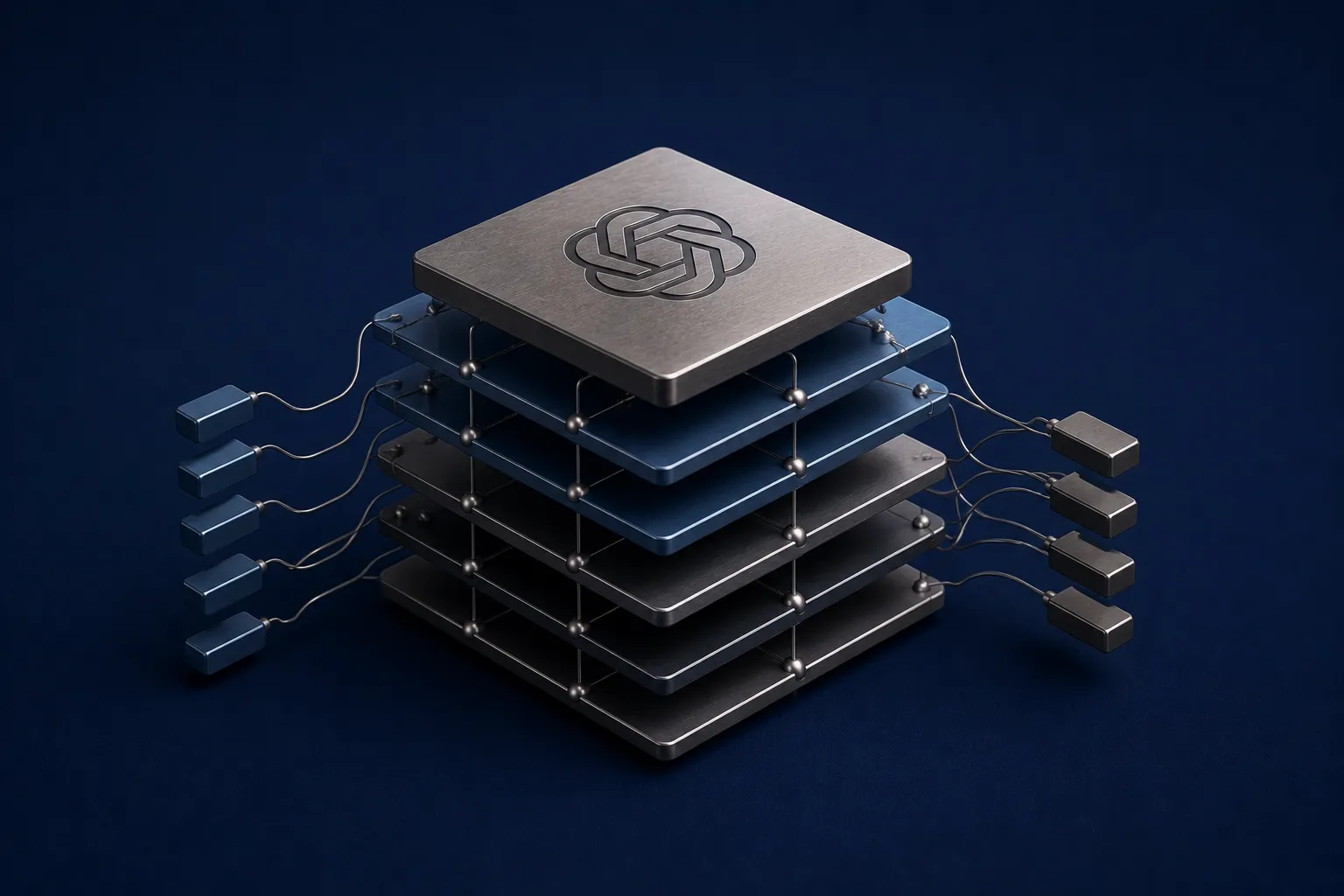
Architectures de transformeurs : guide des conceptions de réseaux neuronaux d'IA modernes
Transformer architectures are neural network design patterns built around attention: they let a model compare tokens, patches, audio chunks, or other units of input data and decide which relationships matter for a prediction. They are not one fixed model. GPT-style large language models, BERT-style classifiers, T5-style translation systems, vision transformers, and multimodal systems all use transformer technology differently.
The shared idea is simple but powerful: a transformer model turns an input sequence into token representations, uses an attention mechanism to model relationships among those tokens, and stacks multiple transformer blocks to refine those representations. The architecture then changes depending on the task: understanding, text generation, machine translation, speech recognition, image classification, document AI, or multimodal reasoning.
What are transformer architectures?
Transformer architectures are a family of neural network architecture designs built around attention mechanisms. The original Transformer, introduced in Attention Is All You Need in 2017, replaced the sequential processing of recurrent neural networks with attention-based computation. Instead of reading an input sentence one word at a time, a transformer can process entire sequences and compare relevant parts of the sequence in parallel.
This is why “transformer” should not be treated as a single diagram. A transformer model is an adaptable pattern. Some architectures are built to understand an input sequence. Some are built to generate an output sequence. Others combine both functions, or adapt the same core concepts to images, audio, video, and other forms of sequential data.
The key difference between transformer architectures is not just size. It is what information each token can attend to:
- Encoder-only architectures use bidirectional self attention, so each input token can attend to the full input context.
- Decoder-only architectures use masked self attention, so each token can attend only to previous tokens during next-token prediction.
- Encoder-decoder architectures use both the encoder and the decoder, where the encoder processes the input and the decoder generates outputs using cross-attention.
- Vision and multimodal architectures change what a “token” means, using image patches, audio segments, or fused representations from multiple modalities.
- Efficient and sparse architectures change the attention pattern to reduce cost, especially for long range dependencies.
At the foundation is the same set of key components: input tokens, embeddings, positional encoding, self attention mechanism, multi head attention, feed forward layers, residual connection paths, layer normalization, and multiple transformer blocks stacked into deeper networks.
Why transformer architectures changed AI
Transformers changed artificial intelligence because they made it practical to train large neural networks on massive training data. Earlier recurrent neural networks rnns process sequential data step by step. That structure works for short sequences, but it makes long sequences hard to train and difficult to parallelize. Transformers can process entire sequences simultaneously, allowing them to capture long-range dependencies more effectively than RNNs, which process data sequentially and struggle with long sequences.
The self-attention mechanism in transformers allows the model to weigh the importance of different tokens in a sequence, enabling it to capture long-range dependencies effectively. In natural language processing, that means a word near the end of a paragraph can attend to a word near the beginning. In code, a variable reference can connect to a definition many lines earlier. In vision transformers, an image patch can attend to another distant region of the image.
Transformers utilize a multi-head attention mechanism, which allows the model to focus on different parts of the input sequence simultaneously, capturing various relationships between tokens. This is one reason transformer architectures became strong at complex language understanding, semantic meaning representation, machine translation, summarization, and text generation. Multiple attention heads can learn different patterns: syntax, position, entity relationships, topic continuity, or other statistical structure in human language.
The architecture also fits modern hardware. Transformers are designed to take advantage of parallel processing, which allows them to utilize the computational power of GPUs more effectively than RNNs, leading to faster training times and the ability to handle larger datasets. This GPU-friendly structure helped enable modern large language models, large-scale image generation systems, speech recognition models, and multimodal assistants.
Transformer technology also moved beyond natural language processing nlp. The same architectural idea now appears in computer vision, audio modeling, protein modeling, robotics, document AI, and multimodal systems. A model can treat words, image patches, or audio frames as tokens, then use attention to model relationships among them.
Core components of transformer architectures
Every transformer architecture rearranges a common set of building blocks. The details vary, but the core components remain recognizable across encoder-only, decoder-only, encoder decoder, vision, multimodal, sparse, and MoE systems.
Tokens and embeddings. A transformer begins by turning input data into tokens. In text, tokens may be words, subwords, characters, or byte-level units. In vision transformers, tokens are often image patches. In audio models, tokens can represent waveform segments or spectrogram slices.
Input embeddings convert the input sequence into a mathematical representation that algorithms can understand, transforming tokens into numerical vectors that carry semantic and syntactic information. Each token in a transformer model is assigned an ID number, and these IDs are used to navigate the model’s vocabulary database, significantly reducing the computational power needed to process text. The embedding process involves generating initial contextless vector embeddings for each token, which can either be learned during training or taken from a pretrained word embedding model. Transformers use embeddings to represent discrete tokens as continuous vectors, allowing the model to calculate relationships between words in mathematical terms and understand human language patterns.
Positional information. A plain self attention mechanism does not automatically know token order. If a model only receives token embeddings, it can compare tokens, but it does not inherently know whether one token came before another. Positional encoding solves this.
Positional encoding is a fixed-size vector representation that provides the transformer model with information about the relative positions of tokens within a sequence, allowing it to process sequences in a way that respects their order. The positional encoding is typically added to the token embeddings before they enter the attention mechanism, ensuring that the model can consider the order of tokens when making predictions. The original transformer architecture uses a sinusoidal function to generate positional encodings, which allows the model to learn to attend by relative position, facilitating the understanding of token relationships in sequences.
Modern transformer architectures may use learned absolute positions, relative position bias, rotary positional encoding, or other positional encoding layer designs. The choice matters most when models need longer context windows than they saw during training.
Self attention. Self attention lets each token look at other tokens in the same sequence. The attention mechanism in transformers computes attention scores using a scaled dot-product approach, where each token is represented by query, key, and value vectors to determine the relevance of tokens to one another.
In simple terms, a token’s query vector asks, “What am I looking for?” Key vectors describe what each token offers, and value vectors contain the information that will be passed forward if that token is relevant. The model compares a query vector with key vectors, applies a softmax function to produce attention weights, then combines the corresponding value vectors. This attention layer lets the model emphasize relevant parts of the input sequence.
Multi head attention. Instead of using one attention pattern, transformers use multiple attention heads. This design is called multi head attention because several attention heads run in parallel, each with its own learned weight matrix projections for query key and value. One head may focus on nearby words, another may focus on long-distance dependencies, and another may capture semantic relationships.
Feed-forward layers. After attention, each token representation passes through a feed forward network, often an MLP made from linear layer transformations and nonlinear activation functions. These feed forward layers transform the representation at each position and often contain a large share of the model’s parameters.
Residual connections and normalization. A residual connection lets information skip around an attention or feed forward block, making deep training more stable. Layer normalization stabilizes activations and gradients, helping multiple transformer blocks stacked on top of one another train reliably.
Stacked block design. A transformer is not one attention computation. It is usually many repeated blocks. Each encoder layer or decoder layer refines token representations. The original transformer model architecture included six layers for both the encoder and decoder, allowing for deep learning of complex relationships in the data. Modern large language models may use dozens or even hundreds of layers, depending on scale and purpose.
Encoder-only transformer architectures
Encoder-only transformer architectures are built for understanding and representation. They read the full input sequence at once and create contextualized token representations. Because they use bidirectional self attention, each input token can attend to tokens on both sides. This makes encoder-only models strong when the task requires full-context analysis rather than step-by-step generation.
The best-known example is BERT, short for bidirectional encoder representations from transformers. BERT-style models are trained to build rich representations of language by predicting masked tokens and learning sentence-level relationships. Related models include RoBERTa, ALBERT, Electra, and sentence transformers.
Encoder-only architectures work well for:
- Sentiment analysis, where the model classifies the emotional tone of text.
- Semantic search, where the model turns queries and documents into embeddings.
- Document classification, where the model assigns labels to reports, emails, tickets, or legal documents.
- Named-entity recognition, where the model identifies people, organizations, locations, dates, or other entities.
- Embeddings, where the output is a vector representation used for retrieval, clustering, or similarity comparison.
An encoder-only model does not usually generate long text one token at a time. It is designed to understand and encode input data. In a classification system, the final encoder layer may feed into a final linear layer that produces a probability distribution over labels. In a semantic search system, the output may be an embedding vector rather than an output sequence.
The trade-off is clear: encoder-only transformers are excellent when the model needs to analyze an input, but they are not the natural choice for open-ended text generation, chatbots, or next word prediction.
Decoder-only transformer architectures
Decoder-only transformer architectures are built for autoregressive generation. They predict the next token from previous tokens. This is the architecture family behind GPT-style models and many modern LLMs used for chatbots, code completion, creative writing, agents, and conversational AI.
The crucial design feature is masked self attention. In a decoder only transformer, the model cannot look at future tokens when predicting the next token. A mask blocks attention to future positions, so each position can attend only to previous tokens and, in some implementations, itself. During training, this teaches the model to estimate the probability distribution for the next token. During inference, the model generates one token, appends it to the context, then uses that new context to generate the next token.
This is why modern LLMs are usually not “the original transformer” exactly. The original transformer was an encoder-decoder model designed for sequence-to-sequence machine translation. GPT-style systems are mostly decoder-only transformer architectures adapted and scaled for next-token prediction.
Decoder-only architectures are useful for:
- Chatbots, where the model generates conversational responses from previous dialogue.
- Text generation, where the model writes continuations, explanations, emails, articles, or dialogue.
- Code completion, where the model predicts code from preceding context.
- Story generation and creative writing, where the model extends a prompt into a longer output.
- Agent workflows, where the model generates tool calls, plans, and intermediate reasoning traces.
Decoder-only models are efficient during generation because they can cache previous key vectors and value vectors instead of recomputing the full past context every time. However, long contexts still become expensive, and decoder-only models do not have a separate encoder processes stage for a distinct source input unless the information is placed into the prompt.
Encoder-decoder transformer architectures
Encoder-decoder transformer architectures are built for sequence-to-sequence transformations. They are useful when there is a clear input sequence and a separate output sequence: translate this sentence, summarize this article, answer this question from a passage, or convert structured data into text.
The encoder-decoder architecture in transformers consists of multiple layers, where the encoder processes input tokens into contextualized representations and the decoder generates output sequences based on these representations. The encoder reads the input sentence or document and produces contextual token representations. The decoder then generates previously generated outputs one token at a time while attending to the encoder’s output.
Each encoder layer in a transformer includes a self-attention mechanism and a feed-forward neural network, while each decoder layer contains a masked self-attention mechanism, a cross-attention mechanism, and a feed-forward network. The masked self attention in the decoder prevents access to future tokens. The cross-attention mechanism lets the decoder’s query vector attend to key vectors and value vectors from the encoder output.
This architecture is especially strong for:
- Machine translation, where an input sentence in one language becomes an output sequence in another.
- Summarization, where a long document becomes a shorter version.
- Question answering, where the model generates an answer based on source text.
- Rewriting, where the input and output are related but structurally different.
- Structured generation, where the model converts tables, forms, or instructions into formatted text.
Examples include the original Transformer from 2017, T5-style models, BART, MarianMT, and Pegasus. T5 is especially important because it reframed many natural language processing tasks as text-to-text problems. Classification, summarization, translation, and question answering can all be expressed as input text transformed into output text.
The trade-off is complexity. Encoder-decoder systems are more structured than decoder-only systems, but they require both encoder and decoder computation. For tasks with a strong source-target relationship, that extra structure is often worth it.
Transformer architectures beyond text
Transformer architectures are not limited to human language. The same design pattern can process image patches, audio frames, video segments, document layouts, graph nodes, or combinations of modalities. The important shift is tokenization: the model needs a way to convert input data into tokens or token-like units.
Vision transformers (ViT)
Vision transformers apply transformer architecture to computer vision. Instead of using convolutional neural networks as the only default approach, a ViT splits an image into fixed-size patches, flattens each patch, projects it into an embedding, adds positional information, and feeds the resulting sequence into transformer encoder blocks.
In this setup, image patches act like input tokens. Spatial relationships are modeled through self attention and positional encoding. The model can learn which regions of an image are relevant to each other, even if they are far apart.
Vision transformers are used for:
- Image classification, where the model labels an image.
- Object detection, where the model identifies objects and locations.
- Medical imaging, where long-range spatial context may help detect patterns in scans.
- Visual recognition, where the model learns representations for faces, scenes, products, or documents.
ViTs showed that transformer technology could compete with convolutional neural networks when enough training data and compute were available. Later variants improved efficiency and spatial structure by using hierarchical designs, local attention windows, hybrid convolutional front ends, and sparse attention.
Multimodal transformer architectures
Multimodal transformer architectures combine more than one type of input data. A system may process text and images, speech and text, video and audio, or scanned documents with layout and language. The central challenge is fusion: the model must learn how tokens from different modalities relate to one another.
Cross-modal attention is one common solution. For example, text queries may attend to image patch keys and value vectors. In visual question answering, a model may receive an image and a question, then attend to relevant parts of the image before generating an answer. In image captioning, the model generates language based on visual tokens. In document AI, the model may combine OCR text, page layout, tables, and visual structure.
Multimodal transformers are used for:
- Image captioning, where the model describes visual content in text.
- Visual question answering, where the model answers questions about an image.
- Document AI, where the model interprets forms, invoices, contracts, or reports.
- Speech recognition, where audio representations are converted into text.
- Video understanding, where the model relates frames, audio, and language.
These systems show that the transformer is a flexible neural network architecture rather than a text-only model. The same attention mechanism can connect words, pixels, patches, sounds, and other learned representations.
Efficient transformer architectures
Standard self attention is powerful but expensive. In full attention, each token may compare itself with every other token. That cost grows quickly as the context gets longer. For long documents, codebases, transcripts, books, or video sequences, full attention can become the bottleneck.
Efficient transformer architectures modify attention, memory, or computation to reduce cost while preserving useful modeling capacity.
Common approaches include:
- Sparse attention, where each token attends only to selected tokens instead of the entire sequence.
- Local attention, where tokens attend mainly to nearby neighbors.
- Block-sparse attention, where attention is computed over structured blocks.
- Linear attention and kernel approximations, where attention is reformulated to reduce sequence-length cost.
- Memory-based methods, where the model stores compressed information from earlier segments.
- Long-context architectures, where positional systems, attention patterns, and caching are adapted for extended inputs.
- Optimized kernels, such as FlashAttention-style implementations that improve memory efficiency.
These designs matter because long range dependencies are essential in many real tasks. A legal document analysis model may need to connect a definition on page 3 to a clause on page 80. A codebase review model may need to relate a function call to a definition in another file. A transcript summarizer may need to track decisions across a multi-hour meeting.
Efficient architectures are useful for:
- Legal document review, where inputs can span many pages.
- Codebase analysis, where context may include multiple files.
- Long transcripts, where speakers and decisions unfold over time.
- Research paper analysis, where citations, methods, and results appear far apart.
- Enterprise search and retrieval, where documents often exceed standard context limits.
The trade-off is that efficiency can reduce flexibility. Fixed sparse patterns may miss relevant parts of a sequence. Learned sparse attention can adapt better, but it adds complexity. Hardware also matters: irregular sparse operations do not always run faster unless the implementation matches the accelerator well.
Mixture-of-experts transformer architectures
Mixture-of-experts transformer architectures scale model capacity by routing tokens through selected expert sub-networks. Instead of activating the entire network for every token, an MoE model uses a routing system to choose which experts should process each token.
The idea is straightforward: the model may contain many expert feed forward networks, but only a small subset activates for a given token. This lets the total parameter count grow without making the inference cost increase proportionally for every token. A large model can have enormous capacity while keeping the active compute per token closer to a smaller model.
MoE systems are especially relevant for large-scale models where only part of the network activates per token. The router learns to send different token representations to different experts. Some experts may specialize in code, others in math-like patterns, others in multilingual data, and others in particular semantic or structural patterns. The specialization is learned from training data, not manually assigned in a simple rule-based way.
Applications include:
- Large language models, where MoE increases capacity while controlling active compute.
- Multilingual systems, where different experts may handle different language patterns.
- Code and reasoning models, where specialized experts may improve certain domains.
- Vision MoE models, where image patches can be routed through selected expert layers.
- High-capacity enterprise systems, where different workloads may benefit from modular expertise.
The trade-offs are real. Routing must be efficient. Load balancing is critical because some experts can become overused while others remain undertrained. Communication costs rise when experts are spread across hardware. Memory requirements can remain high because all expert parameters must be stored even if only a subset is active for each token.
MoE is best understood as a scaling strategy, not magic. It helps increase capacity, but it also makes training, serving, monitoring, and hardware placement more complex.
How to choose the right transformer architecture
The right transformer architecture depends on the prediction task. The main question is not “Which transformer is best?” but “What does the model need to do with the input data?”
Use encoder-only transformers when you need to understand and analyze input. They are a strong fit for classification, semantic search, document classification, entity recognition, and embeddings. If the task is “read this and produce a label or representation,” encoder-only is often the cleanest choice.
Use decoder-only transformers when you need to generate continuations. They are the standard choice for chatbots, content creation, code completion, story generation, and next-token prediction. If the task is “continue from this prompt,” a decoder-only architecture is usually the natural fit.
Use encoder-decoder transformers when you need a clear input-to-output transformation. They are strong for translation, summarization, rewriting, structured text generation, and question answering over source material. If the input and output are distinct sequences, encoder-decoder structure gives the model a dedicated way to encode the source before generating the target.
Use vision or multimodal transformers when the task involves non-text or combined modalities. Vision transformers are useful for image classification, visual recognition, object detection, and medical imaging. Multimodal transformers are useful for image captioning, visual question answering, speech recognition, video understanding, and document AI.
Use efficient transformer variants when sequence length, latency, memory, or cost is the main constraint. Sparse attention, long-context methods, memory compression, quantization, and optimized attention kernels are useful for legal document analysis, codebase review, long transcripts, and other workloads where full attention is too expensive.
Practical architecture decisions also include:
- Context window length, which affects positional encoding and attention cost.
- Model depth and width, which affect quality, speed, and memory.
- Number of attention heads, which affects relationship modeling and compute.
- Feed forward dimension, which often drives parameter count.
- Training objective, tels que la modélisation linguistique masquée ou la prédiction du prochain jeton.
- Latence d'inférence, en particulier pour le chat en temps réel ou le service en production.
- Disponibilité matérielle, y compris la mémoire GPU, la bande passante et les contraintes de déploiement.
Une architecture de transformeur doit correspondre à la tâche. Les modèles uniquement encodeurs ne sont pas des chatbots ratés ; ce sont des modèles de représentation. Les modèles uniquement décodeurs ne sont pas des remplacements universels pour chaque système séquence-à-séquence ; ce sont de puissants générateurs. Les modèles encodeur-décodeur ne sont pas obsolètes ; ils restent utiles lorsque la structure entrée-sortie est importante.
Pourquoi les architectures de transformeurs ont besoin de GPU
Les architectures de transformeurs ont besoin de GPU car elles reposent fortement sur de grandes opérations matricielles. L'attention calcule les projections de requête, de clé et de valeur, les scores d'attention, les sommes pondérées des vecteurs de valeur et de grandes transformations de propagation avant. Ces opérations se prêtent bien au parallélisme GPU, et les plateformes modernes plateformes GPU pour les charges de travail d'IA et scientifiques sont conçues pour exposer précisément ce type de calcul parallèle, c'est pourquoi choisir les meilleurs GPU IA pour l'entraînement et l'inférence de transformeurs a un impact si direct sur la performance et le coût des projets.
Les parties les plus gourmandes en calcul sont :
- Projections d'attention, où les embeddings sont multipliés par des paramètres de matrice de poids appris.
- Attention par produit scalaire mis à l'échelle, où les vecteurs de requête sont comparés aux vecteurs de clé.
- Couches de propagation avant, où chaque jeton passe par de grandes transformations de couches linéaires.
- Blocs empilés répétés, où le même motif s'exécute des dizaines de fois dans les grands modèles.
- Rétropropagation à l'entraînement, où les activations et les gradients doivent être stockés et mis à jour.
La mémoire est tout aussi importante que la vitesse brute. Les grands embeddings, les paramètres de modèle, les états d'optimiseur, les activations et les caches clé-valeur d'inférence peuvent consommer une VRAM significative. Les longues fenêtres de contexte augmentent la pression sur la mémoire car le modèle doit stocker davantage de représentations de jetons et de données liées à l'attention, ainsi, le choix de le bon GPU pour l'inférence de LLM en 2026 revient souvent à faire correspondre la VRAM et la bande passante aux tailles de modèles et longueurs de contexte cibles.
Les choix d'infrastructure comprennent les GPU locaux, les GPU cloud d'hyperscalers, les plateformes d'inférence spécialisées et le calcul GPU distribué. Pour un entraînement et une inférence accessibles, les services de location de GPU pour les charges de travail d'IA facilitent le déploiement de puissance de calcul à la demande, et des options spécifiques telles que les GPU cloud RTX 4090 pour le fine-tuning et les modèles de diffusion ou les GPU cloud RTX 5090 pour l'inférence de LLM à haut débit peuvent être pratiques pour l'expérimentation, le fine-tuning de modèles plus petits, l'évaluation et le service de charges de travail basées sur des transformeurs. Les GPU de centre de données haut de gamme peuvent être meilleurs pour l'entraînement à l'échelle de la recherche de pointe ou les charges de travail par lots très importantes, mais de nombreux projets de transformeurs appliqués dépendent davantage de la VRAM disponible, d'un accès stable et du coût par sortie utile que du prestige.
Les techniques d'optimisation courantes comprennent la précision mixte, la quantification, le parallélisme tensoriel, la mise en cache clé-valeur, le traitement par lots, l'élagage et les noyaux d'attention efficaces. Celles-ci n'éliminent pas le besoin de calcul intensif, mais elles rendent le déploiement des transformeurs plus pratique, surtout lorsqu'elles sont associées à des benchmarks montrant comment les GPU grand public comme les RTX 4090 et 5090 se comparent aux A100 pour l'inférence de LLM et des conseils sur la configuration de la RTX 5090 comme GPU le plus rapide de sa catégorie pour les charges de travail d'IA et de LLM.
L'avenir des architectures de transformeurs
L'avenir des architectures de transformeurs sera probablement plus spécialisé, plus efficace et plus hybride. La conception originale du transformeur reste fondamentale, mais les architectures modernes continuent d'évoluer car les tâches, les longueurs de contexte, le matériel et les contraintes de coût ne cessent de changer.
Plusieurs directions sont particulièrement importantes.
Architectures hybrides combinent des blocs de transformeurs avec d'autres modèles de séquence, tels que des modèles d'espace d'état ou des systèmes de mémoire de type récurrent. L'objectif est de conserver les atouts de l'auto-attention tout en améliorant l'efficacité du contexte long.
Systèmes de transformeurs augmentés par la récupération connectent les modèles à des sources de connaissances externes. Au lieu de stocker chaque fait dans des paramètres, un système peut récupérer des documents pertinents, des passages, des entrées de base de données ou des sorties d'outils au moment de l'inférence, puis utiliser un transformeur pour générer des réponses fondées.
Voies d'inférence dynamiques permettent aux modèles de choisir quels jetons, couches, têtes ou experts activer. Cela inclut la parcimonie apprise, le routage, l'élagage de jetons et les conceptions de mélange d'experts. L'objectif est d'allouer la puissance de calcul là où c'est pertinent au lieu de traiter chaque jeton de manière égale.
Architectures spécifiques à un domaine continueront de se développer. Les modèles de code, les modèles médicaux, les modèles juridiques, les modèles de parole, les modèles de vision et les modèles scientifiques bénéficient souvent d'une tokenisation, de données d'entraînement, d'une gestion du contexte et d'une évaluation spécialisées.
Architectures de transformeurs à contexte long continueront de s'améliorer. Les modèles avec des centaines de milliers de jetons de contexte deviennent plus pratiques, mais ils nécessitent de meilleurs systèmes positionnels, une meilleure gestion de la mémoire, une mise en cache et une attention clairsemée ou approximative.
Architectures multimodales deviendront plus unifiées. Les futurs systèmes combineront de plus en plus le texte, les images, l'audio, la vidéo, les données structurées et les actions dans un seul modèle ou un système de modèles coordonnés.
Le principal compromis restera le même : les transformeurs s'adaptent bien et sont très performants, mais l'attention peut être coûteuse, la gestion des contextes longs est difficile, et les modèles plus grands nécessitent une puissance de calcul considérable. Les architectures futures les plus utiles ne seront pas simplement plus grandes. Elles seront mieux adaptées à la tâche, aux données, au matériel et aux contraintes de coût des applications d'IA réelles.
Your next workload belongs on Hivenet.
Pick one AI, compute, or storage workload and see the difference for yourself. Spin it up in minutes, or let our team map your fastest path to production.