

Sign in to Hivenet
Access your files and manage your storage account.
Store
Access your files and manage your storage account.
Compute
Launch instances and manage your compute resources.
Store and Compute still use separate accounts today. We’re working on a unified sign-in.
Just need to send a file?
Use Send directlyNew to Hivenet? Get Started
Get started with Hivenet
Choose what you want to use first.
Store
Back up photos and files across your devices.
Compute
Launch self-serve GPU compute for demanding work.
Store and Compute still use separate accounts today. We’re working on a unified account experience.
Need Hivenet for business?
Talk to salesNeed to send a file?
Open SendAlready have an account? Sign in
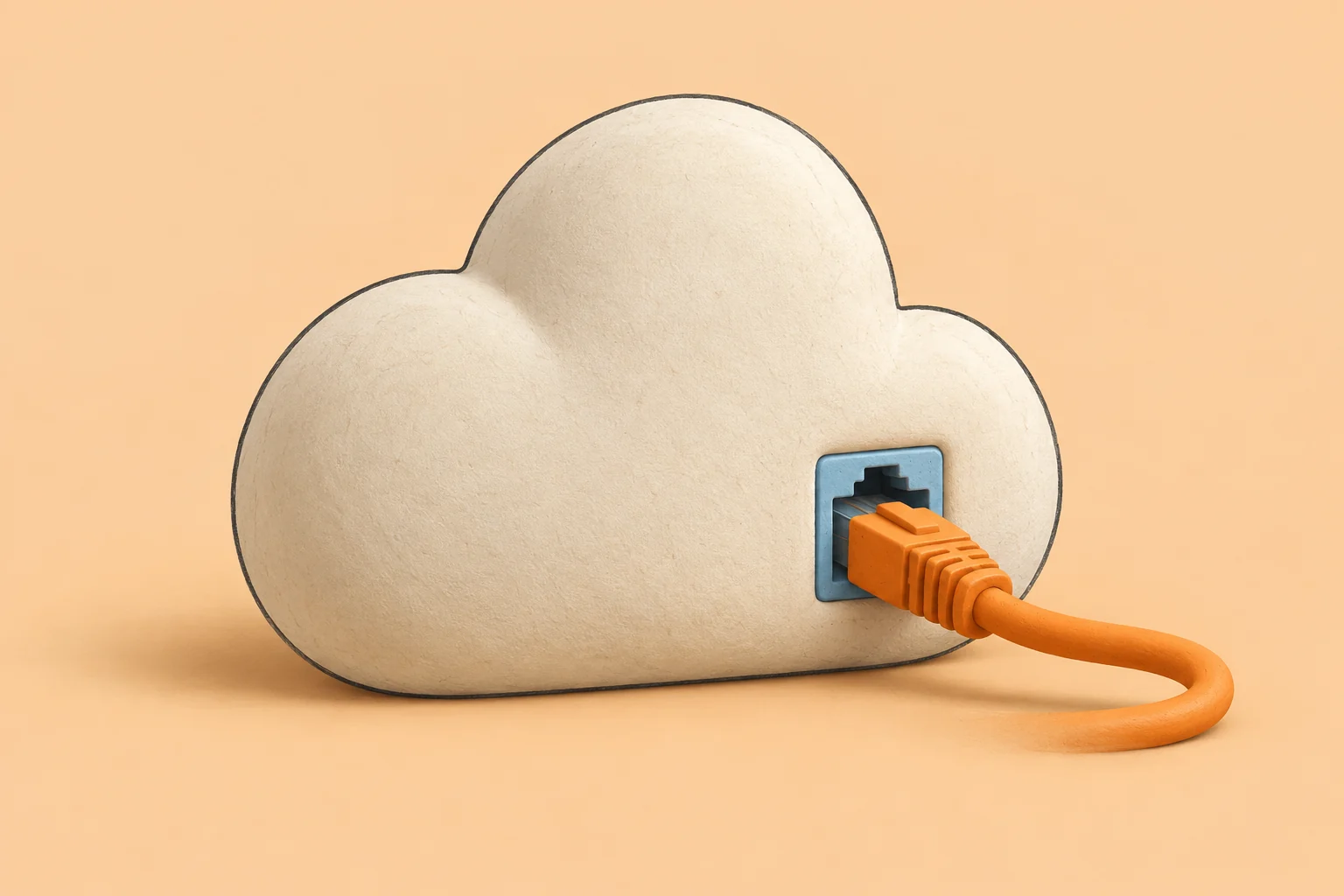
Definition of a cloud: from weather to cloud computing
The definition of a cloud depends on the context. In weather, it is a visible collection of tiny water droplets, ice particles, or both in the atmosphere. In computing, “the cloud” means computing resources and services reached through a network, with some storage or processing taking place beyond the user's device.
The connection between these meanings is a metaphor. A weather cloud contains water; a computing cloud uses physical hardware. Understanding that distinction helps when reading a forecast, a dictionary entry, or a description of where an application runs.
Two definitions, two different things
An atmospheric cloud is a physical formation. Its visible droplets and ice particles are suspended in air. For example: “A low cloud covered the ridge.”
The computing cloud refers to network-accessible systems that provide storage, software, processing, and related services. For example: “The team keeps its shared project files in the cloud.” The files still occupy physical storage, even when the user cannot see the equipment.
English also uses “cloud” for a mass of other material, such as dust, and for something that obscures an idea or situation. Those are established uses of the same word, not alternative technical definitions of cloud computing.
The scientific definition of a cloud
The World Meteorological Organization's International Cloud Atlas defines an atmospheric cloud by what it contains: very small liquid-water or ice particles, sometimes both, suspended in the atmosphere. It usually remains above the ground. Larger water or ice particles and other suspended material can also be present.
This definition does not require a cloud to look like a rounded white shape. A thin veil, a broad layer, and a towering formation can all be clouds. Their appearance alone does not tell you whether their particles are liquid, frozen, or a mixture.
Is a cloud made of water vapor?
The visible part is made of droplets or ice particles. Water vapor is water as a gas and is normally invisible. A cloud forms when atmospheric conditions allow that water to become suspended liquid or ice.
That distinction matters because moist air can look completely clear. “There is water in the air” and “there is a visible cloud” describe different conditions. A cloud can also contain dust, smoke particles, or other material without being composed mainly of those substances.
How does a cloud form?
A common route begins with moist air rising and cooling. NOAA's explanation of cloud formation describes the role of temperature, moisture, and small airborne particles:
- Water enters the air as vapor, including through evaporation.
- Moist air rises or cools by another process. Rising air expands as pressure decreases, which lowers its temperature.
- As the air approaches saturation, conditions can allow droplets to form on tiny particles such as salt or dust.
- Large numbers of droplets or ice particles become visible together. Their formation and evaporation continue as the surrounding conditions change.
This is a useful outline, not a single recipe for every cloud. Temperature, moisture, air movement, pressure, and suitable particles influence the process. Ice formation can also occur through different pathways; water does not always pass through an identical sequence of stages.
How are clouds, fog, smoke, and dust different?
Fog is a cloud at or near the ground. NOAA's comparison of fog and clouds explains their shared basis in suspended droplets or ice particles. Location is the practical distinction. This is why saying that a cloud can never touch the ground is too absolute.
“A cloud of dust” uses the word more broadly. It describes a visible mass of dust particles, rather than a weather cloud made mainly of water droplets or ice. Smoke and ash can also form cloudlike masses. Some real plumes contain mixtures, so the phrase alone does not establish their composition.
In “a cloud of uncertainty,” nothing is floating in the air. The expression describes uncertainty hanging over a situation. Readers recognize the figurative meaning from the surrounding words.
Why did computing borrow the word cloud?
Network diagrams often use a cloud-shaped outline to stand for a network whose internal details are not needed in that drawing. A connection enters the shape and emerges elsewhere; the diagram does not have to show each router or cable inside.
Cloudflare's account of the naming metaphor explains how this shorthand came to describe computing performed through networked infrastructure. As people used remote storage and software services, “the cloud” became a familiar way to refer to the systems behind them.
The metaphor hides detail from the diagram, not hardware from reality. It does not imply that data travels through weather clouds. There is also no need to assign the term to one inventor or one exact date to understand its meaning.
What does the cloud mean in computing?
In everyday computing language, the cloud includes systems that provide storage, applications, databases, and processing over a network. A webmail service may keep messages on remote systems while your device displays them. An organization might obtain computing capacity to run its own application.
The formal NIST definition of cloud computing is more specific than “a computer somewhere else.” It describes a model in which users can obtain and release shared, configurable resources on demand through a network, with little manual interaction with the provider.
“The cloud” often names those resources or their environment, while “cloud computing” names the way they are supplied and used. Ordinary speech does not always preserve this distinction. Both expressions can describe the same service from different angles.
Your device still handles the interface, local software, and sometimes downloaded data or substantial processing. Using the cloud does not mean that everything happens remotely or that every device can access every service.
“A cloud” versus “the cloud”
In technology, “a cloud” can identify a particular environment or deployment. “A private cloud for the research department” points to resources dedicated to a particular organization or use. Its boundaries depend on the system being described.
“The cloud” often refers collectively to cloud services. “We moved the application to the cloud” describes a general arrangement without naming the provider, region, or deployment.
A cloud is not necessarily one server, one data center, one account, or one geographic region. Several physical and software components can operate together as one environment. Equally, “the cloud” does not identify one worldwide computer owned by a single company.
The articles “a” and “the” are clues, not a test that works without context. In “The cloud above the station is getting darker,” “the cloud” identifies a particular weather cloud. In “The organization operates a cloud,” the same noun has a computing meaning.
Is cloud a noun?
Yes. Merriam-Webster lists both noun and verb uses of cloud. As a noun, it can name a weather formation or computing environment. “Two clouds crossed the valley” and “The teams use separate clouds” both use a plural noun, with different meanings.
As a verb, “cloud” can mean to obscure or make something less clear. In “Conflicting reports clouded the discussion,” “clouded” describes what the reports did. This grammatical use does not describe a computer service.
In “cloud storage” and “cloud computing,” the noun “cloud” modifies another noun. English commonly uses nouns as modifiers, as the British Council explains. Calling every word placed before a noun an adjective would miss that distinction.
Cloud, internet, remote server, and data center
These terms describe different parts of a computing arrangement:
- Internet: the global system of connected networks. It carries many kinds of communication, including traffic for cloud services. Cloud services can also use private networks or dedicated connections.
- Remote server: a computer accessed over a network. Remote access alone does not tell you whether resources are pooled, obtained through self-service, adjusted to demand, or metered.
- Data center: a physical facility containing IT equipment and supporting power, cooling, and networking. It can host a cloud platform, conventional servers, or both.
- Cloud service: computing resources supplied through a service model. The hardware, network connection, software, and management processes work together to provide it.
The two spellings data center and datacenter refer to the same kind of facility. Neither spelling makes that facility a cloud.
Where is the computing cloud physically located?
Its hardware operates in real places, including data centers, private organizational sites, and distributed or edge locations. A service may use several sites, and a file can have pieces or copies in more than one location.
Our guide to where cloud data is physically stored separates facilities, regions, servers, replicas, and backups. Choosing a region does not necessarily identify one machine or establish the location of every supporting service.
An organization can operate its own cloud. “Private cloud” describes resources for one organization's exclusive use; it does not require that the organization own every building or manage every layer itself.
What the computing definition does not guarantee
Calling a service “cloud” does not guarantee security, privacy, uninterrupted access, unlimited capacity, or lower cost. Those depend on the specific service, configuration, contract, and workload.
“Public cloud” does not mean that customer files are automatically public. Access controls still determine who can use particular resources. Likewise, cloud storage does not automatically establish an independent backup or a working recovery process.
The infrastructure also requires hardware, electricity, physical space, cooling, and maintenance. The weather metaphor is useful shorthand, but those material requirements remain.
How to identify the intended meaning
Read the words around “cloud.” References to humidity, ice, rainfall, or a forecast suggest weather. References to accounts, applications, storage, or providers suggest computing. Words such as doubt, suspicion, and judgment often signal figurative language.
For example, “The cloud moved across the field” needs more context, while “The cloud stored the team's files” points clearly toward technology. Ask what the cloud contains, what it does, and what the sentence is about. Those clues are more reliable than the word on its own.
Your next workload belongs on Hivenet.
Pick one AI, compute, or storage workload and see the difference for yourself. Spin it up in minutes, or let our team map your fastest path to production.