

Faça login na Hivenet
Acesse seus arquivos e gerencie sua conta de armazenamento.
Armazenar
Acesse seus arquivos e gerencie sua conta de armazenamento.
Computar
Inicie instâncias e gerencie seus recursos computacionais.
Atualmente, o Store e o Compute ainda usam contas separadas. Estamos trabalhando em um login unificado.
Só precisa enviar um arquivo?
Use Enviar diretamenteNovo na Hivenet? Comece
Comece a usar o Hivenet
Escolha o que você quer usar primeiro.
Armazenar
Faça backup de fotos e arquivos em seus dispositivos.
Computar
Inicie a computação de GPU de autoatendimento para trabalhos exigentes.
Atualmente, o Store e o Compute ainda usam contas separadas. Estamos trabalhando em uma experiência de conta unificada.
Precisa da Hivenet para negócios?
Fale com a equipe de vendasPrecisa enviar um arquivo?
Abrir EnviarJá tem uma conta? Faça login
Entre em contato com Hivenet
Escolha o caminho adequado à sua pergunta.
Contato geral
Perguntas, suporte, parcerias, imprensa ou qualquer outra coisa que não esteja vinculada a uma conversa de vendas.
Fale com a equipe de vendas
Pergunte sobre computação, armazenamento, IA privada ou uma implantação comercial maior.
Precisa de ajuda com configuração, cobrança ou solução de problemas? Comece com Suporte para obter a resposta mais rápida.
O que significa HPC? (Computação de Alto Desempenho explicada)
HPC stands for high performance computing. It means using more computing power than a normal laptop, desktop, or single server can provide, often through supercomputers, computer clusters, GPUs, or cloud resources.
What does HPC stand for?
High performance computing (HPC) is the practice of aggregating computing resources to achieve performance greater than that of a single workstation or server, often involving custom-built supercomputers or clusters of individual computers. In plain terms, hpc generally refers to using powerful computers together to finish hard computing tasks in a timely manner.
HPC systems can perform quadrillions of calculations per second, far beyond standard desktop computers, which typically operate at around 3 billion calculations per second. That difference matters when you need to process data, run simulations, or train models at serious scale.
- HPC: high performance computing for large amounts of data and complex algorithms.
- High performance: faster processing speed, more memory, more parallel work, and optimal performance across the system.
- Computing: CPUs, GPUs, data storage, network storage, and tools working together.
- Everyday computing: browsing, documents, and spreadsheets. HPC: weather forecasting, drug discovery, engineering applications, and AI.
What HPC means in plain English
HPC means lots of computers working together so your job finishes in hours instead of weeks. It may be a high performance computer, a single powerful server, an hpc cluster with many compute nodes, or cloud hpc rented on demand.
Examples include:
- Computing millions of possible drug molecules for healthcare research.
- Simulating airflow over a car or aircraft wing.
- Processing terabytes of telescope input data.
- Running data analytics for fraud detection, risk, or business intelligence.
Most hpc work uses parallel computing: many tasks run at the same time across multiple cores, GPUs, or multiple computers.

Why is HPC important today?
HPC is essential for processing massive datasets and performing complex calculations quickly, which is crucial for applications in fields such as scientific research, simulation, and business intelligence. The phrase hpc important keeps showing up because modern work produces more data than ordinary computers can handle.
Since around 2010, IoT devices, 3D imaging, genomics, and AI models have created massive amounts of data. Demand is also driven by real-time insights and AI-driven workloads; IBM reports that the market for scalable computing infrastructure for HPC and AI reached USD 85.7 billion in 2023.
Key reasons include:
- Faster storm tracking, stock analysis, live video, fraud detection, and systems that stream live events.
- Shorter R&D cycles for chip design, automotive crash simulations, pandemic modeling from 2020–2022, and energy research.
- New insights from large models, including large language models and generative AI.
- high performance computing hpc has become central to modern AI workloads, not just national labs.
How does HPC work? (From nodes to HPC clusters)
HPC work typically runs on HPC clusters, which are groups of networked computers acting like one big machine. An HPC cluster consists of multiple high-speed computer servers, known as nodes, that are networked together to manage parallel computing workloads.
The main components look like this:
- Computer clusters / HPC clusters: many servers called nodes.
- Compute nodes: the machines that run calculations.
- Login nodes: where users connect, edit files, and submit jobs.
- High-speed network: moves data between nodes with low delay.
- Shared storage: lets all nodes read and write files.
- job scheduler: software such as Slurm or PBS that queues work and assigns resources.
The performance of an HPC cluster relies on the speed and efficiency of its components, including compute nodes, storage systems, and networking capabilities, which must all operate in harmony. Think of compute network storage as one connected stack.
Inside an HPC cluster: nodes and roles
Not all nodes in a cluster are identical. HPC clusters can be designed as homogeneous, where all nodes have similar performance, or heterogeneous, where nodes have different characteristics and capabilities.
Each node in an HPC cluster can be a compute node, login node, or storage node, with compute nodes executing the computations and login nodes serving as the user interface.
- Login nodes support interactive access.
- Compute nodes run batch jobs.
- Large memory nodes support memory-heavy workloads.
- GPU nodes handle accelerated hpc workloads.
- Storage and controller nodes manage data storage, scheduling, and system health.
Login nodes
Login nodes are the entry point to an hpc cluster, usually through SSH.
- Use them to browse directories, edit scripts, compile code, and submit jobs.
- Don’t run heavy computation there; it can slow access for other users.
- Some modules may differ from compute nodes.
- Treat login nodes as a control area, not the place where hpc work runs.
Compute nodes
Compute nodes are the workhorses of high performance computing. Users usually don’t SSH directly into them; the scheduler launches jobs there.
- They mount shared filesystems so code and data are available from any node.
- Large hpc systems may have hundreds or thousands of compute nodes.
- Each node may have many CPU cores, so total core count can reach tens of thousands.
- These nodes supply the main computing resources for cluster computing.
Large memory nodes
Large memory nodes are specialized compute nodes with far more RAM, often 1–4 TB.
They are useful for:
- Genomics assembly.
- In-memory analytics.
- Large graph algorithms.
- Finite element models with huge meshes.
Schedulers often route high-memory jobs to these nodes. They can also support shared-memory models such as OpenMP.
GPU nodes
GPU nodes are compute nodes equipped with powerful processors for parallel computation, not just graphics.
Common uses include:
- AI training and inference.
- Rendering and visual effects.
- Scientific simulations using CUDA or OpenCL.
- Computer vision and benchmarking.
Modern high performance computing HPC increasingly depends on GPU nodes because many workloads run better on GPUs than CPUs.
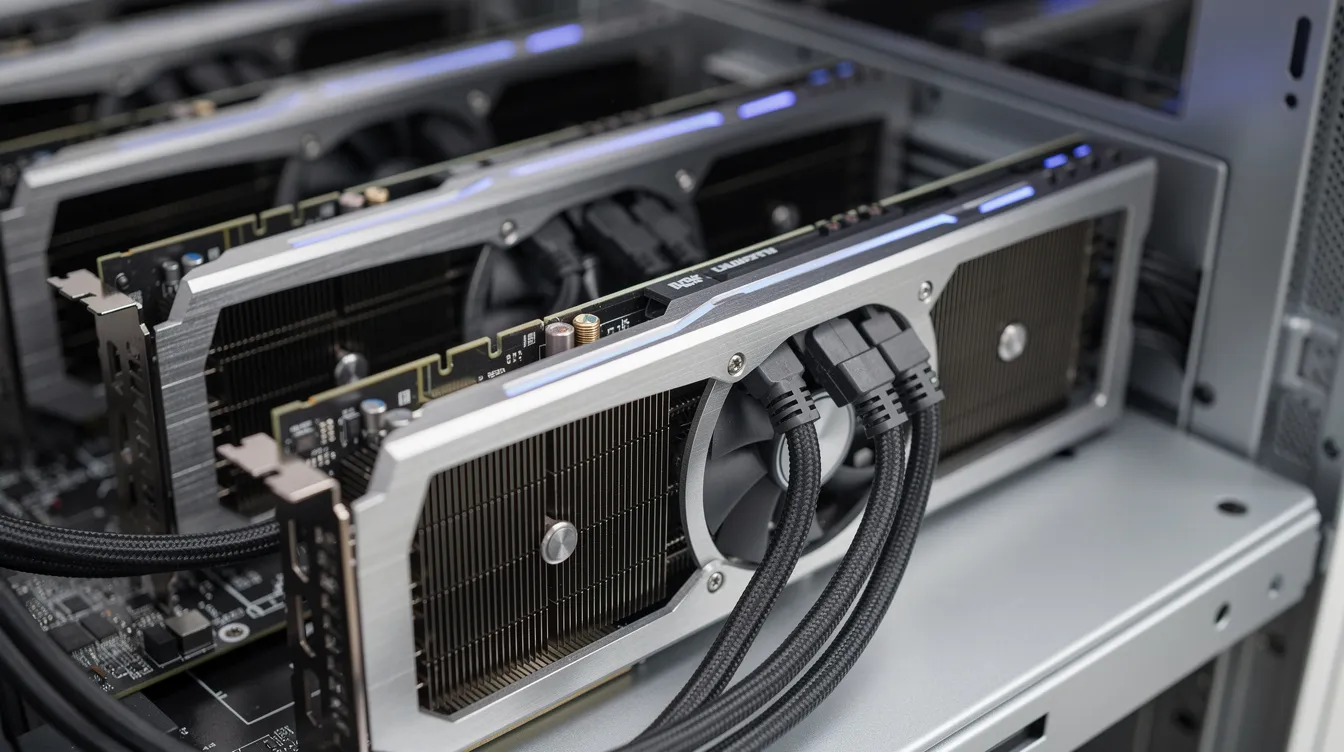
Classic HPC vs modern GPU-driven HPC
Classic HPC grew around CPU-based supercomputers, message passing interface software, and tightly linked simulations. Modern GPU-driven HPC now includes AI, deep learning, rendering, and data science.
- Classic HPC: physics, climate, CFD, structural analysis, national supercomputers, and Top500-style systems.
- Modern GPU HPC: growth since about 2012 with CUDA and deep learning.
- Hybrid systems: CPUs, GPUs, high-bandwidth memory, and fast network links.
- Why GPUs help: thousands of cores, strong parallel performance, and good performance per watt.
HPC vs cloud computing vs GPU compute
HPC is about the workload pattern: large-scale, parallel, high performance computing. Cloud is one way to access the infrastructure.
- On premises HPC: institutions own and run computer clusters.
- Cloud HPC: providers such as google cloud rent high performance instances or clusters.
- GPU compute: renting or owning GPU machines for parallel workloads, often via GPU rental services tailored for AI and deep learning projects.
HPC in the cloud, also known as HPC as a service (HPCaaS), provides a faster, more scalable, and more affordable way for organizations to use high-performance computing resources without on-premises infrastructure, closely mirroring modern AI compute rental models for cloud-based GPUs and TPUs. Cloud-based HPC allows organizations to scale their computing resources up or down based on demand, enabling cost savings and flexibility in managing workloads. HPC in the cloud can reduce the time required to process large datasets, with tasks that might take weeks on traditional systems being completed in hours.
How HPC jobs are structured (tightly vs loosely coupled)
Not all hpc applications need the same infrastructure. Job structure affects cost, performance, security, and scalability.
- Tightly coupled jobs: tasks depend on each other and need fast, low-latency networks. Examples include MPI-based weather models, CFD, and large climate simulations.
- Loosely coupled jobs: many independent tasks share storage but run separately. Examples include rendering frames, Ray or Dask jobs, job arrays, Monte Carlo simulations, and hyperparameter tests.
Tightly coupled jobs often fit classic supercomputers. Loosely coupled or single-node GPU workloads can run well on flexible cloud or GPU platforms.
Common use cases for high performance computing
HPC now supports national labs, researchers, startups, and most organizations that need serious computing.
- Scientific research: astronomy, particle physics, climate modeling, seismology, and energy research.
- Engineering and design: car crash simulations, airflow over wings, chip design, and structural models.
- Saúde: HPC é usado na área da saúde para descoberta de medicamentos, gestão de prontuários médicos e diagnóstico rápido de câncer, acelerando processos que antes levavam anos.
- Automotivo: HPC é usado para simular e otimizar projetos de produtos, incluindo dinâmica de fluidos computacional (CFD) para aerodinâmica e desempenho de baterias.
- Meteorologia: HPC desempenha um papel crucial na previsão do tempo e na modelagem climática, processando vastas quantidades de dados meteorológicos para prever padrões climáticos e mudanças no clima.
- Finanças: Instituições financeiras usam HPC para análise de dados em tempo real, detecção de fraudes de cartão de crédito, análise de risco e simulações de Monte Carlo.
- Mídia: Renderização CGI, animação e efeitos visuais para eventos ao vivo e filmes.
O verdadeiro problema de custo no HPC moderno
Possuir hardware e usar HPC em nuvem de hiperescala ambos apresentam desvantagens.
- Clusters on-premises exigem hardware, energia, refrigeração, pessoal, atualizações e espaço físico.
- HPC em nuvem pode trazer preços altos de GPU, taxas de armazenamento, custos de saída de dados, cotas e aprisionamento tecnológico (lock-in).
- Instâncias spot e preemptivas são mais baratas, mas interrupções podem desperdiçar longas execuções de treinamento de IA ou simulações.
Durante o boom da IA de 2023–2025, a escassez de GPUs tornou o acesso a GPUs de alto desempenho um gargalo maior do que os núcleos de CPU, levando muitas equipes a comparar os principais provedores de GPU em nuvem para cargas de trabalho de IA. O desafio prático é muitas vezes conseguir o acelerador certo, pelo preço certo e pelo tempo que você precisar, e não simplesmente obter um supercomputador.
Onde plataformas modernas como Compute with Hivenet se encaixam no HPC
Existe uma lacuna entre os grandes supercomputadores institucionais e o complexo HPC de hiperescala. A nuvem de GPU segura e distribuída da Compute with Hivenet se encaixa no meio-termo prático para cargas de trabalho intensivas em GPU, de nó único ou paralelismo flexível.
Pode suportar:
- Treinamento e ajuste fino de IA em GPUs NVIDIA RTX 4090 em nuvem.
- Inferência de IA em GPUs NVIDIA RTX 5090 otimizadas para LLMs de baixa latência.
- Ciência de dados e análise de dados que se beneficiam de computação distribuída em vários dispositivos.
- Renderização.
- Simulação e avaliação de desempenho.
- Experimentos de pesquisa e processamento em lote.
A Computação com Hivenet oferece acesso sob demanda a GPUs NVIDIA modernas sem contratos de longo prazo, com FAQs claras sobre faturamento, armazenamento e aluguel de instâncias, incluindo RTX 4090 a €0,40/hora e RTX 5090 a €0,75/hora. O objetivo é oferecer computação GPU de baixo custo e alta qualidade, com GPUs dedicadas, VRAM completa, execução não-spot por padrão, preços públicos, faturamento descomplicado e suporte quando algo dá errado.
Seu modelo de infraestrutura distribuída também pode reduzir a pressão para continuar construindo novos data centers, alinhando-se com infraestrutura neocloud projetada para cargas de trabalho priorizando IA, o que é importante, pois a energia renovável, o desperdício de hardware e os custos de refrigeração se tornam parte do planejamento de HPC.

Como saber se você precisa de HPC (e que tipo)
Muitas pessoas encontram o termo HPC pela primeira vez quando um laptop ou uma VM normal se torna muito lenta.
Você pode precisar de HPC se:
- Simulações ou análises levam dias ou semanas em uma única máquina.
- Sua carga de trabalho exige centenas de GB ou TB de memória.
- Você precisa de milhares de tarefas semelhantes, como renderização em lote ou varreduras de parâmetros.
- Você treina ou ajusta modelos de aprendizado profundo em GPUs modernas e precisa de orientação sobre a escolha das melhores GPUs de IA para 2026.
- Você precisa de respostas quase em tempo real de modelos pesados ou análise de streaming e está comparando hiperescaladores com plataformas de neoclaud focadas em GPU como Compute com Hivenet.
Se você executa códigos MPI fortemente acoplados, pode precisar de um cluster clássico ou de HPC em nuvem especializada. Se sua carga de trabalho é intensiva em GPU e se encaixa em um ou poucos nós, uma plataforma focada em GPU como Compute com Hivenet, construída para ser uma nuvem de IA mais barata e simples, pode ser mais simples e econômica.
Comece pequeno: teste uma GPU, meça o desempenho e depois escale. HPC não se trata de ter a maior máquina do mundo, mas sim de escolher os recursos de alto desempenho certos para sua carga de trabalho.