

Iniciar sesión en Hivenet
Acceda a sus archivos y administre su cuenta de almacenamiento.
Tienda
Acceda a sus archivos y administre su cuenta de almacenamiento.
Calcular
Lanza instancias y administra tus recursos informáticos.
En la actualidad, Store y Compute siguen utilizando cuentas distintas. Estamos trabajando en un inicio de sesión unificado.
¿Solo necesitas enviar un archivo?
Usa Enviar directamente¿Eres nuevo en Hivenet? Comenzar
Comience con Hivenet
Elige lo que quieres usar primero.
Tienda
Realiza copias de seguridad de fotos y archivos en todos tus dispositivos.
Calcular
Lance la computación de GPU de autoservicio para trabajos exigentes.
En la actualidad, Store y Compute siguen utilizando cuentas distintas. Estamos trabajando en una experiencia de cuenta unificada.
¿Necesitas Hivenet para tu empresa?
Hable con el departamento de ventas¿Necesitas enviar un archivo?
Abrir Enviar¿Ya tienes una cuenta? Iniciar sesión
Contacta con Hivenet
Elige la ruta que se ajuste a tu pregunta.
Contacto general
Preguntas, soporte, asociaciones, prensa o cualquier otra cosa que no esté relacionada con una conversación de ventas.
Hable con el departamento de ventas
Pregunte acerca de la computación, el almacenamiento, la IA privada o una implementación empresarial más grande.
¿Necesitas ayuda con la configuración, la facturación o la solución de problemas? Comience con Soporte para obtener la respuesta más rápida.
¿Qué significa HPC? (Computación de alto rendimiento explicada)
HPC stands for high performance computing. It means using more computing power than a normal laptop, desktop, or single server can provide, often through supercomputers, computer clusters, GPUs, or cloud resources.
What does HPC stand for?
High performance computing (HPC) is the practice of aggregating computing resources to achieve performance greater than that of a single workstation or server, often involving custom-built supercomputers or clusters of individual computers. In plain terms, hpc generally refers to using powerful computers together to finish hard computing tasks in a timely manner.
HPC systems can perform quadrillions of calculations per second, far beyond standard desktop computers, which typically operate at around 3 billion calculations per second. That difference matters when you need to process data, run simulations, or train models at serious scale.
- HPC: high performance computing for large amounts of data and complex algorithms.
- High performance: faster processing speed, more memory, more parallel work, and optimal performance across the system.
- Computing: CPUs, GPUs, data storage, network storage, and tools working together.
- Everyday computing: browsing, documents, and spreadsheets. HPC: weather forecasting, drug discovery, engineering applications, and AI.
What HPC means in plain English
HPC means lots of computers working together so your job finishes in hours instead of weeks. It may be a high performance computer, a single powerful server, an hpc cluster with many compute nodes, or cloud hpc rented on demand.
Examples include:
- Computing millions of possible drug molecules for healthcare research.
- Simulating airflow over a car or aircraft wing.
- Processing terabytes of telescope input data.
- Running data analytics for fraud detection, risk, or business intelligence.
Most hpc work uses parallel computing: many tasks run at the same time across multiple cores, GPUs, or multiple computers.

Why is HPC important today?
HPC is essential for processing massive datasets and performing complex calculations quickly, which is crucial for applications in fields such as scientific research, simulation, and business intelligence. The phrase hpc important keeps showing up because modern work produces more data than ordinary computers can handle.
Since around 2010, IoT devices, 3D imaging, genomics, and AI models have created massive amounts of data. Demand is also driven by real-time insights and AI-driven workloads; IBM reports that the market for scalable computing infrastructure for HPC and AI reached USD 85.7 billion in 2023.
Key reasons include:
- Faster storm tracking, stock analysis, live video, fraud detection, and systems that stream live events.
- Shorter R&D cycles for chip design, automotive crash simulations, pandemic modeling from 2020–2022, and energy research.
- New insights from large models, including large language models and generative AI.
- high performance computing hpc has become central to modern AI workloads, not just national labs.
How does HPC work? (From nodes to HPC clusters)
HPC work typically runs on HPC clusters, which are groups of networked computers acting like one big machine. An HPC cluster consists of multiple high-speed computer servers, known as nodes, that are networked together to manage parallel computing workloads.
The main components look like this:
- Computer clusters / HPC clusters: many servers called nodes.
- Compute nodes: the machines that run calculations.
- Login nodes: where users connect, edit files, and submit jobs.
- High-speed network: moves data between nodes with low delay.
- Shared storage: lets all nodes read and write files.
- job scheduler: software such as Slurm or PBS that queues work and assigns resources.
The performance of an HPC cluster relies on the speed and efficiency of its components, including compute nodes, storage systems, and networking capabilities, which must all operate in harmony. Think of compute network storage as one connected stack.
Inside an HPC cluster: nodes and roles
Not all nodes in a cluster are identical. HPC clusters can be designed as homogeneous, where all nodes have similar performance, or heterogeneous, where nodes have different characteristics and capabilities.
Each node in an HPC cluster can be a compute node, login node, or storage node, with compute nodes executing the computations and login nodes serving as the user interface.
- Login nodes support interactive access.
- Compute nodes run batch jobs.
- Large memory nodes support memory-heavy workloads.
- GPU nodes handle accelerated hpc workloads.
- Storage and controller nodes manage data storage, scheduling, and system health.
Login nodes
Login nodes are the entry point to an hpc cluster, usually through SSH.
- Use them to browse directories, edit scripts, compile code, and submit jobs.
- Don’t run heavy computation there; it can slow access for other users.
- Some modules may differ from compute nodes.
- Treat login nodes as a control area, not the place where hpc work runs.
Compute nodes
Compute nodes are the workhorses of high performance computing. Users usually don’t SSH directly into them; the scheduler launches jobs there.
- They mount shared filesystems so code and data are available from any node.
- Large hpc systems may have hundreds or thousands of compute nodes.
- Each node may have many CPU cores, so total core count can reach tens of thousands.
- These nodes supply the main computing resources for cluster computing.
Large memory nodes
Large memory nodes are specialized compute nodes with far more RAM, often 1–4 TB.
They are useful for:
- Genomics assembly.
- In-memory analytics.
- Large graph algorithms.
- Finite element models with huge meshes.
Schedulers often route high-memory jobs to these nodes. They can also support shared-memory models such as OpenMP.
GPU nodes
GPU nodes are compute nodes equipped with powerful processors for parallel computation, not just graphics.
Common uses include:
- AI training and inference.
- Rendering and visual effects.
- Scientific simulations using CUDA or OpenCL.
- Computer vision and benchmarking.
Modern high performance computing HPC increasingly depends on GPU nodes because many workloads run better on GPUs than CPUs.
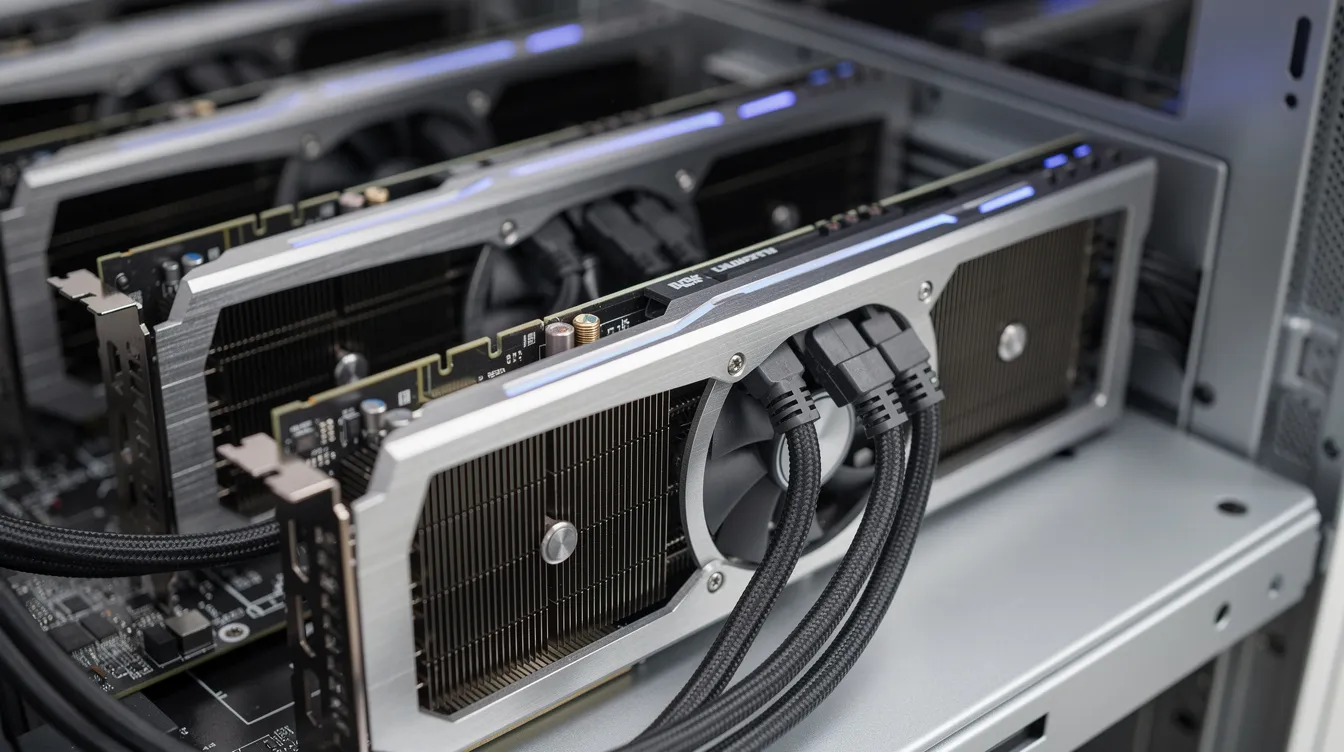
Classic HPC vs modern GPU-driven HPC
Classic HPC grew around CPU-based supercomputers, message passing interface software, and tightly linked simulations. Modern GPU-driven HPC now includes AI, deep learning, rendering, and data science.
- Classic HPC: physics, climate, CFD, structural analysis, national supercomputers, and Top500-style systems.
- Modern GPU HPC: growth since about 2012 with CUDA and deep learning.
- Hybrid systems: CPUs, GPUs, high-bandwidth memory, and fast network links.
- Why GPUs help: thousands of cores, strong parallel performance, and good performance per watt.
HPC vs cloud computing vs GPU compute
HPC is about the workload pattern: large-scale, parallel, high performance computing. Cloud is one way to access the infrastructure.
- On premises HPC: institutions own and run computer clusters.
- Cloud HPC: providers such as google cloud rent high performance instances or clusters.
- GPU compute: renting or owning GPU machines for parallel workloads, often via GPU rental services tailored for AI and deep learning projects.
HPC in the cloud, also known as HPC as a service (HPCaaS), provides a faster, more scalable, and more affordable way for organizations to use high-performance computing resources without on-premises infrastructure, closely mirroring modern AI compute rental models for cloud-based GPUs and TPUs. Cloud-based HPC allows organizations to scale their computing resources up or down based on demand, enabling cost savings and flexibility in managing workloads. HPC in the cloud can reduce the time required to process large datasets, with tasks that might take weeks on traditional systems being completed in hours.
How HPC jobs are structured (tightly vs loosely coupled)
Not all hpc applications need the same infrastructure. Job structure affects cost, performance, security, and scalability.
- Tightly coupled jobs: tasks depend on each other and need fast, low-latency networks. Examples include MPI-based weather models, CFD, and large climate simulations.
- Loosely coupled jobs: many independent tasks share storage but run separately. Examples include rendering frames, Ray or Dask jobs, job arrays, Monte Carlo simulations, and hyperparameter tests.
Tightly coupled jobs often fit classic supercomputers. Loosely coupled or single-node GPU workloads can run well on flexible cloud or GPU platforms.
Common use cases for high performance computing
HPC now supports national labs, researchers, startups, and most organizations that need serious computing.
- Scientific research: astronomy, particle physics, climate modeling, seismology, and energy research.
- Engineering and design: car crash simulations, airflow over wings, chip design, and structural models.
- Salud: El HPC se utiliza en el sector sanitario para el descubrimiento de fármacos, la gestión de historiales médicos y el diagnóstico rápido de cáncer, acelerando procesos que antes tardaban años.
- Automoción: El HPC se utiliza para simular y optimizar diseños de productos, incluyendo la dinámica de fluidos computacional (CFD) para la aerodinámica y el rendimiento de las baterías.
- Meteorología: El HPC desempeña un papel crucial en la previsión meteorológica y la modelización climática al procesar grandes cantidades de datos meteorológicos para predecir patrones climáticos y cambios en el clima.
- Finanzas: Las instituciones financieras utilizan el HPC para el análisis de datos en tiempo real, la detección de fraudes con tarjetas de crédito, el análisis de riesgos y las simulaciones de Monte Carlo.
- Medios: Renderizado CGI, animación y efectos visuales para eventos en vivo y cine.
El verdadero problema de costes en el HPC moderno
Poseer hardware y usar HPC en la nube de hiperescaladores conllevan ventajas y desventajas.
- Los clústeres locales requieren hardware, energía, refrigeración, personal, actualizaciones y espacio físico.
- El HPC en la nube puede implicar precios elevados de GPU, tarifas de almacenamiento, costes de egreso, cuotas y dependencia del proveedor.
- Las instancias spot y preemptivas son más baratas, pero las interrupciones pueden echar a perder largas ejecuciones de entrenamiento de IA o simulaciones.
Durante el auge de la IA de 2023-2025, la escasez de GPU hizo que el acceso a GPU de alto rendimiento fuera un cuello de botella mayor que los núcleos de CPU, lo que llevó a muchos equipos a comparar los principales proveedores de GPU en la nube para cargas de trabajo de IA. El desafío práctico a menudo es conseguir el acelerador adecuado al precio justo durante el tiempo que se necesite, no simplemente obtener un superordenador.
Dónde encajan las plataformas modernas como Compute with Hivenet en el HPC
Existe una brecha entre los grandes superordenadores institucionales y el complejo HPC de hiperescaladores. La nube de GPU segura y distribuida de Compute with Hivenet se adapta al punto intermedio práctico para cargas de trabajo intensivas en GPU, de nodo único o débilmente paralelas.
Puede soportar:
- Entrenamiento y ajuste fino de IA en GPU en la nube NVIDIA RTX 4090.
- Inferencia de IA en GPU NVIDIA RTX 5090 optimizadas para LLM de baja latencia.
- Ciencia de datos y análisis de datos que se benefician de la computación distribuida en múltiples dispositivos.
- Renderizado.
- Simulación y evaluación comparativa.
- Experimentos de investigación y procesamiento por lotes.
Compute with Hivenet ofrece acceso bajo demanda a GPU NVIDIA modernas sin contratos a largo plazo, con preguntas frecuentes claras sobre facturación, almacenamiento y alquiler de instancias, incluyendo RTX 4090 a 0,40 €/hora y RTX 5090 a 0,75 €/hora. El objetivo es una computación GPU de bajo coste y alta calidad, con GPU dedicadas, VRAM completa, ejecución no spot por defecto, precios públicos, facturación sencilla y soporte cuando algo sale mal.
Su modelo de infraestructura distribuida también puede reducir la presión para seguir construyendo nuevos centros de datos, alineándose con una infraestructura neocloud diseñada para cargas de trabajo priorizando la IA, lo cual es importante a medida que la energía renovable, los residuos de hardware y los costes de refrigeración se integran en la planificación de HPC.
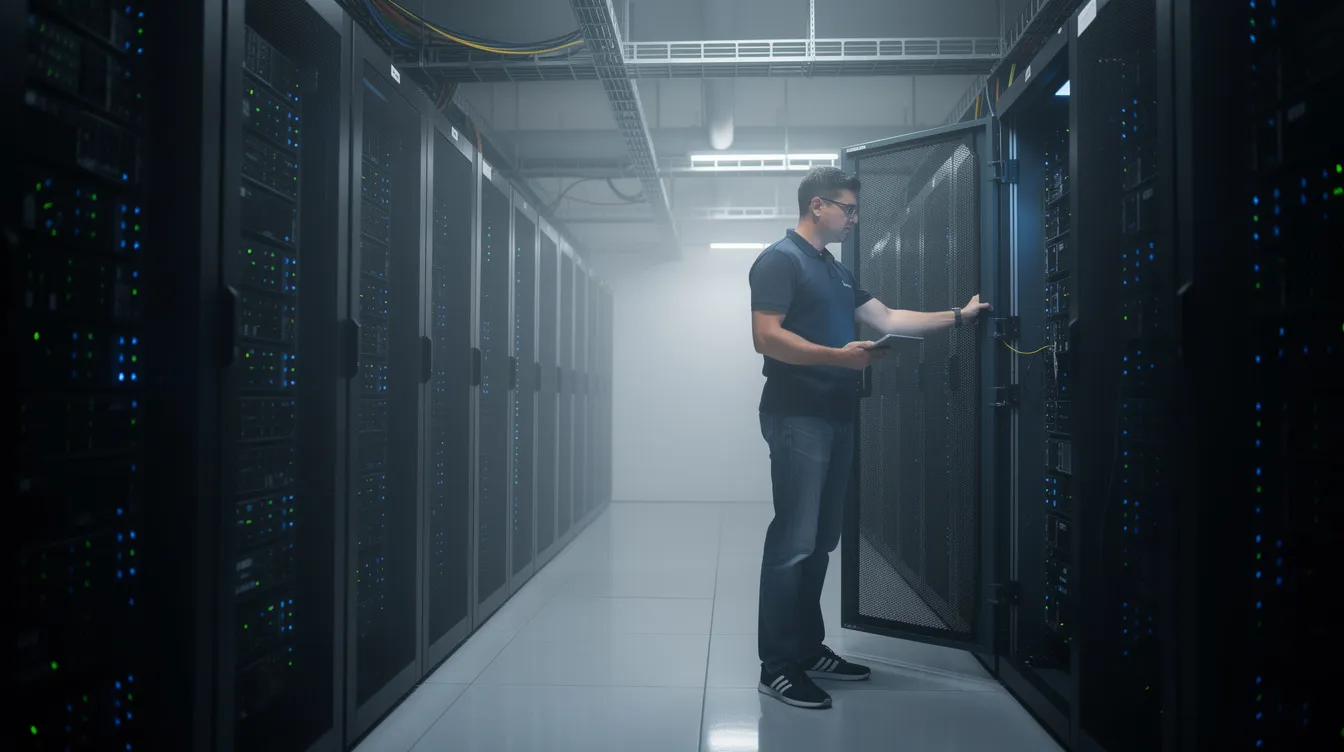
Cómo saber si necesitas HPC (y qué tipo)
Muchas personas se encuentran por primera vez con el término HPC cuando un portátil o una VM normal se vuelve demasiado lenta.
Podrías necesitar HPC si:
- Las simulaciones o análisis tardan días o semanas en una sola máquina.
- Su carga de trabajo necesita cientos de GB o TB de memoria.
- Necesita miles de tareas similares, como renderizado por lotes o barridos de parámetros.
- Entrena o ajusta modelos de aprendizaje profundo en GPUs modernas y necesita orientación sobre cómo elegir las mejores GPUs de IA para 2026.
- Necesita respuestas casi en tiempo real de modelos pesados o análisis de streaming y está comparando hiperescaladores con plataformas neocloud con prioridad en GPU como Compute with Hivenet.
Si ejecuta códigos MPI fuertemente acoplados, es posible que necesite un clúster clásico o un HPC en la nube especializado. Si su carga de trabajo depende en gran medida de la GPU y cabe en uno o pocos nodos, una plataforma centrada en GPU como Compute with Hivenet, diseñada para ser una nube de IA más económica y sencilla, puede ser más sencilla y rentable.
Empiece poco a poco: pruebe una GPU, mida el rendimiento y luego escale. El HPC no se trata tanto de poseer la máquina más grande del mundo, sino de elegir los recursos de alto rendimiento adecuados para su carga de trabajo.